
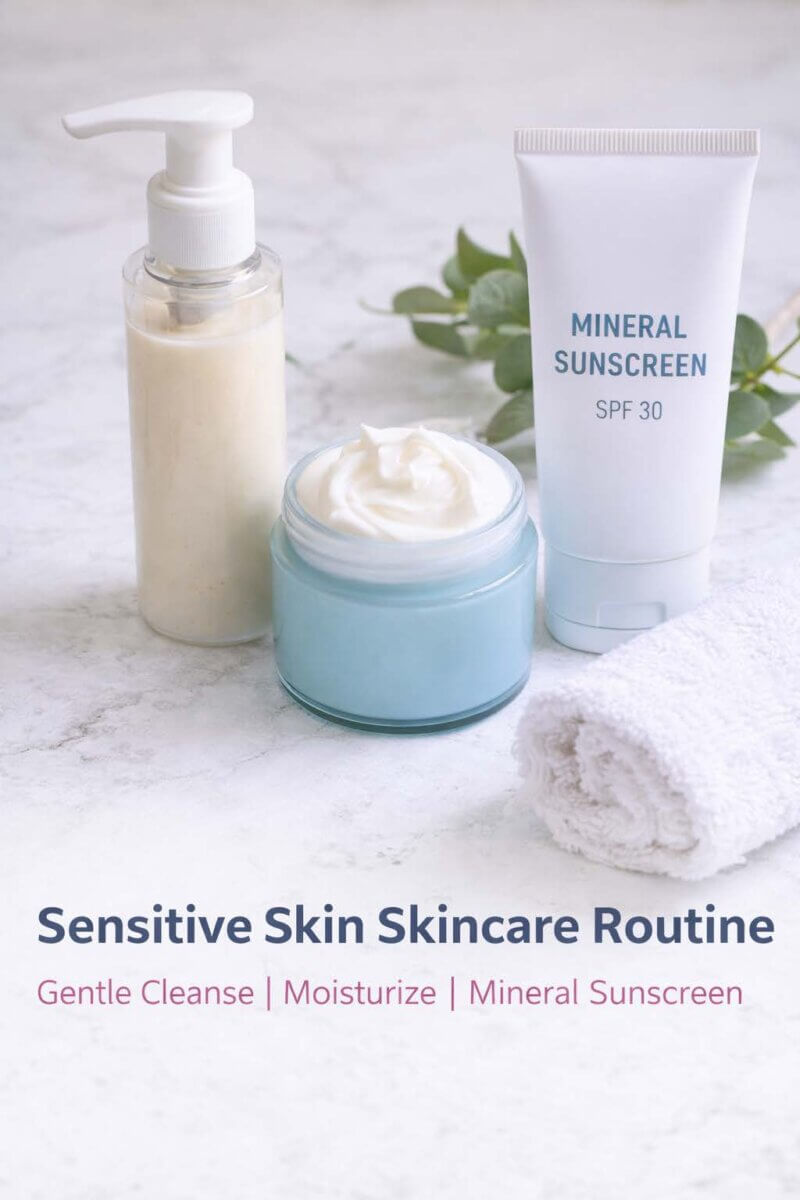
Sensitive skin doesn’t need more products — it needs less stress and more support.
If your skin gets red, tight, itchy, or reactive after trying new skincare, the answer usually isn’t a 10-step routine. It’s a simple, consistent sensitive skin skincare routine that protects your barrier and avoids common triggers.
Below is the exact routine I recommend when you want calm, comfortable skin without the guesswork.
What “Sensitive Skin” Really Means
Sensitive skin usually means your skin barrier is easily disrupted. That can show up as:
Stinging or burning after products
Redness or blotchiness
Dry patches that come and go
Breakouts from “too much” skincare
Flare-ups in cold weather, wind, or indoor heat
The goal isn’t perfection — it’s stability.
This routine is especially helpful if you have:
Skin that stings or burns after products
Redness or irritation with “clean beauty” items
Eczema-prone or reactive skin
Seasonal flare-ups (especially winter)
The Simple 3-Step Sensitive Skin Skincare Routine
Step 1: Cleanse Gently (Once Daily if Needed)
The #1 mistake with sensitive skin is using cleansers that strip.
What to look for:
Creamy or low-lather cleanser
No harsh foaming surfactants
Rinses clean without tightness
How to do it:
Use lukewarm water
Massage lightly with fingertips
Pat dry (don’t rub)
If you wear makeup or sunscreen daily, cleanse at night. In the morning, many sensitive-skin people do well with just a water rinse.
Read more on Gentle skincare tips for sensitive skin on our Blog.
According to the American Academy of Dermatology, sensitive skin often reacts to fragrance, alcohol, and harsh surfactants, making gentle, minimal routines essential.
Step 2: Moisturize Consistently (Barrier First)
Sensitive skin loves moisturizers that support the barrier — not heavy fragrance or trendy “actives.”
Look for:
Plant oils that mimic skin’s natural lipids (like jojoba)
Soothing botanicals (like calendula)
Simple formulas that don’t overload the skin
How to do it:
Apply on slightly damp skin
Use morning + night
Don’t skip just because you’re “oily” — irritation often looks like oiliness
Step 3: Protect Daily (Mineral Sunscreen Matters)
Sun exposure can keep sensitive skin inflamed even when the rest of your routine is perfect.
For sensitive skin, mineral sunscreens (zinc oxide-based) are often better tolerated than chemical filters.
Tip: if sunscreen stings, it’s usually a barrier issue — not just the sunscreen.
What to Avoid if Your Skin Reacts Easily
If you want your routine to work, remove the usual triggers:
Synthetic fragrance (even “lightly scented” can be a problem)
Over-exfoliating (scrubs + acids + retinoids stacked = irritation)
Too many new products at once
Harsh foaming cleansers
Alcohol-heavy toners
Essential oils at high levels (some sensitive skin can’t tolerate them)
Sensitive skin does best with fewer products, fewer variables, and consistent use.
How to Add New Products Without Triggering a Flare
This is the “boring” step that saves your skin:
Add one new product at a time
Test it for 7–10 days before adding anything else
If you react, stop and reset to your basics
Quick patch test: apply a small amount behind the ear or along the jawline for 2–3 nights.
Michigan Winter Tip (This One’s Real)
Cold air + indoor heat can wreck the barrier fast.
To prevent winter flare-ups:
Moisturize immediately after cleansing
Add a second layer of moisturizer at night if you feel tightness
Avoid very hot showers (they trigger redness)
How Long Does It Take for Sensitive Skin to Improve?
Most sensitive skin begins to feel calmer within 7–14 days once irritants are removed and hydration is consistent. Redness, dryness, and tightness gradually lessen as your skin barrier repairs itself. The key is consistency — frequent product switching can slow progress.
Download: Sensitive Skin Ingredient Guide
If you’re tired of guessing what your skin can tolerate, I made a simple guide that explains common ingredients — and which ones tend to be easiest on reactive skin.
👉 Download the Sensitive Skin Ingredient Guide
Final Thoughts
A strong sensitive skin skincare routine is simple:
Cleanse gently. Moisturize consistently. Protect daily.
Then remove the triggers that keep your skin irritated.
Over time, your skin becomes calmer, less reactive, and easier to manage — because your barrier finally gets a chance to recover.