If you’re looking for a serum for sensitive skin, you may be wondering whether adding one to your routine will actually help—or whether it’s just another skincare step you don’t really need.
If you have sensitive or reactive skin, adding another product isn’t always the answer.
Sometimes the best thing you can do is use fewer products and give your skin some consistency.
So, does sensitive skin need a serum or facial oil?
Not necessarily.
A serum or facial oil can be a useful addition when you have a specific reason for using one, but it shouldn’t be something you add simply because you feel like a skincare routine is supposed to have one.
Before adding anything extra, I think it’s more important to make sure the basics are working first.
What Does a Facial Serum Actually Do?
A facial serum is generally a lightweight product designed to deliver ingredients that address particular skincare needs.
Depending on the formula, a serum may be designed to provide hydration, antioxidant support or other targeted benefits.
But not every product called a serum is formulated the same way.
Some serums are water-based. Others are oil-based. And then there are facial oils, which are concentrated blends of oils and oil-soluble ingredients.
The Resilience treatment products I make at Pure are facial oils rather than traditional water-based serums.
That distinction matters because a facial oil and a moisturizer aren’t doing exactly the same job.
Facial Oil vs. Moisturizer: What’s the Difference?
Your moisturizer is part of the foundation of your routine.
A well-formulated moisturizer can combine ingredients that help attract and hold water, soften the skin and reduce moisture loss. I talked about this in more detail in How Does Moisturizer Work? What Your Skin Actually Needs.
A facial oil doesn’t provide water to the skin.
Instead, facial oils can provide emollients and fatty acids that help condition and soften the skin and help reduce moisture loss.
That’s why I don’t consider a facial oil a replacement for a moisturizer.
For sensitive skin, I think of it this way:
Your moisturizer is part of the foundation. A facial oil is an optional extra.
Build the foundation first.
How to Choose a Serum for Sensitive Skin
Sensitive skin doesn’t automatically need either one.
If your skin is comfortable with a simple cleanser and moisturizer, there is nothing wrong with keeping your routine simple.
In fact, if your skin is currently irritated, burning, unusually dry or suddenly reacting to products it normally tolerates, that probably isn’t the time I’d start experimenting with several new products.
Get the basics working first.
For many people with sensitive skin, that means:
Cleanse gently. Moisturize. Protect your skin from the sun during the day.
Once your skin is comfortable with those basics, you can decide whether there’s something else you’d actually like your routine to address.
That’s where a serum or facial oil may make sense.
When Should You Consider Adding a Facial Oil?
Start with one question:
What do I want this product to do?
Maybe your basic routine is working well, but your skin still feels dry and could use some additional moisture support.
Maybe your skin looks dull or feels less supple than it used to.
Maybe your skin is maturing and you’re noticing changes in dryness, texture or softness.
Or maybe your skin is reactive and you’d like a very simple facial oil without a long list of ingredients.
Those are specific reasons for considering another product.
“I saw everyone using one on social media” isn’t quite the same thing. 😂
Especially with reactive skin, every additional product introduces more ingredients your skin has to tolerate.
That doesn’t mean you should be afraid of adding something new.
It just means every product in your routine should have a purpose.
More Ingredients Don’t Automatically Mean Better
Skincare marketing has a way of making us think more must be better.
More ingredients.
More steps.
More products.
More actives.
But sensitive skin doesn’t care how impressive your bathroom counter looks.
It cares whether it is comfortable.
A long ingredient list doesn’t automatically make a product better, and a short ingredient list doesn’t automatically make one better either.
What matters is whether the formula makes sense for its intended purpose and whether your skin tolerates it.
That’s one reason I prefer a deliberate approach to sensitive skincare:
One product. One purpose. One change at a time.
How to Introduce a Facial Oil to Sensitive Skin
If you’ve decided a facial oil makes sense for your skin, don’t change everything else in your routine at the same time.
Keep the rest of your routine familiar.
Before using a new product all over your face, patch test it first.
How to Patch Test Skincare for Sensitive or Reactive Skin.
Then introduce it slowly and pay attention to how your skin responds.
You don’t necessarily need to start by using a new facial oil morning and night every single day.
Follow the directions for the particular product, but also pay attention to your own skin.
If you add a facial oil Monday, switch cleansers Wednesday and try a new moisturizer Friday, you’re not going to have much information if your face is unhappy by Sunday.
Give each change some time.
The American Academy of Dermatology also recommends testing skincare products before adding them to your routine, especially when you’re concerned about a possible skin reaction.
Where Does a Facial Oil Go in Your Skincare Routine?
This doesn’t need to be complicated.
A basic routine using a facial oil can look like this:
Cleanser → Toner → Facial Oil → Moisturizer → Sunscreen during the day
But that doesn’t mean every one of those steps is mandatory.
If your skin doesn’t need toner, skip it.
If you don’t have a reason to use a facial oil, skip that too.
A simple routine that works for your skin is better than a complicated routine your skin hates.
What About Facial Oils for Maturing Sensitive Skin?
This is where an optional facial oil can become particularly useful.
Skin can change as we get older. It may become drier, feel less supple or look a little duller than it once did.
And sensitive skin doesn’t suddenly stop being sensitive because it’s maturing.
So rather than trying to address everything at once, decide what’s most important to you.
Are you primarily dealing with reactive skin?
Is dryness and dullness bothering you?
Or are you noticing that maturing skin needs more nourishment than it used to?
Once you know why you want to add something, choosing the right product becomes much easier.
If you’re unsure where to start, here’s how to introduce new skincare products without irritating sensitive skin.
Which Resilience Facial Oil Is Right for You?
If you’ve been searching for a serum for sensitive skin, a facial oil may be another option depending on what you want the product to accomplish.
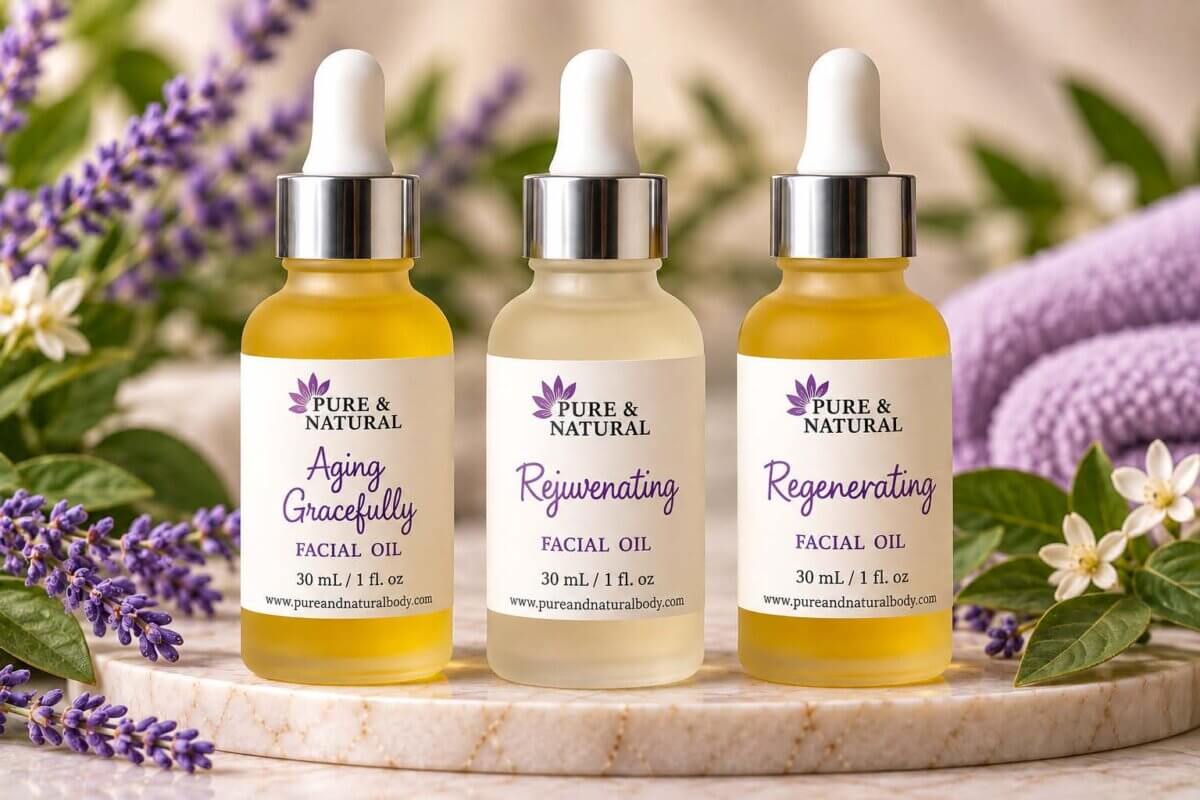
I make three Resilience facial oils, and they aren’t meant to be three versions of the same product.
Each has a different purpose.
Regenerating Facial Oil
Regenerating Facial Oil is the simplest of the three and is designed for sensitive, reactive, dry and easily overwhelmed skin.
It’s made with olive-derived squalane and pomegranate seed oil, along with vitamin E and rosemary antioxidant extract.
It contains no essential oils and no added fragrance.
This is the one I’d look at when simplicity is the priority and your skin tends to react easily.
It provides lightweight moisture, helps reduce moisture loss and supports the skin’s natural moisture barrier without leaving the skin feeling heavily coated.
Rejuvenating Facial Oil
Rejuvenating Facial Oil is designed for skin that feels dry, dull, depleted or in need of additional nourishment.
It combines olive-derived squalane with rosehip, apricot kernel, pomegranate and red raspberry seed oils.
It also contains a low level of frankincense and lavender essential oils.
This is the option I’d look at when dryness and dullness are the bigger concerns and you’re looking for additional nourishment, softness and a naturally radiant appearance.
Aging Gracefully Facial Oil
Aging Gracefully Facial Oil is designed for mature, dry and sensitive skin that needs additional moisture and nourishment.
It combines olive-derived squalane with red raspberry seed oil and avocado oil, along with vitamin E and a low level of frankincense and lavender essential oils.
It’s intended to help replenish moisture, soften and condition dry skin and support a smoother, more supple appearance.
If maturing skin and dryness are your primary concerns, this is the option I’d look at first.
Do You Need All Three?
Absolutely not.
They’re different options for different skin needs.
And you may not need any of them.
That’s something I think gets lost in skincare sometimes.
My goal isn’t to convince you that your routine needs another bottle.
If your cleanser and moisturizer are doing exactly what your skin needs, that’s a good routine.
If your skin has another need that isn’t being addressed, then it may make sense to consider an additional product.
How I Approach Facial Oils at Pure
This is the same philosophy I use throughout the Resilience line.
A product should have a reason to exist.
I don’t think sensitive skin needs more products simply for the sake of having more products.
And I don’t think you need a complicated routine to take good care of your skin.
Regenerating, Rejuvenating and Aging Gracefully are optional steps.
They’re there so you can choose additional support based on what your skin actually needs, rather than using every product because someone told you that’s what a complete skincare routine looks like.
Because skincare should fit your skin—not the other way around.
So, Does Sensitive Skin Need a Serum or Facial Oil?
Maybe.
And that’s a perfectly good answer.
If your cleanser and moisturizer are working and you’re happy with your skin, you don’t need to add a serum or facial oil simply to make your routine more complete.
If there’s something specific you’d like additional support for, then a carefully chosen facial oil may be worth adding.
Know what you want the product to do.
Patch test it.
Introduce it slowly.
Change one thing at a time.
And pay attention to your own skin instead of somebody else’s ten-step routine.
Sensitive skin doesn’t necessarily need more.
It needs products with a purpose. 💜
— Diane
Pure & Natural Body Essentials®